
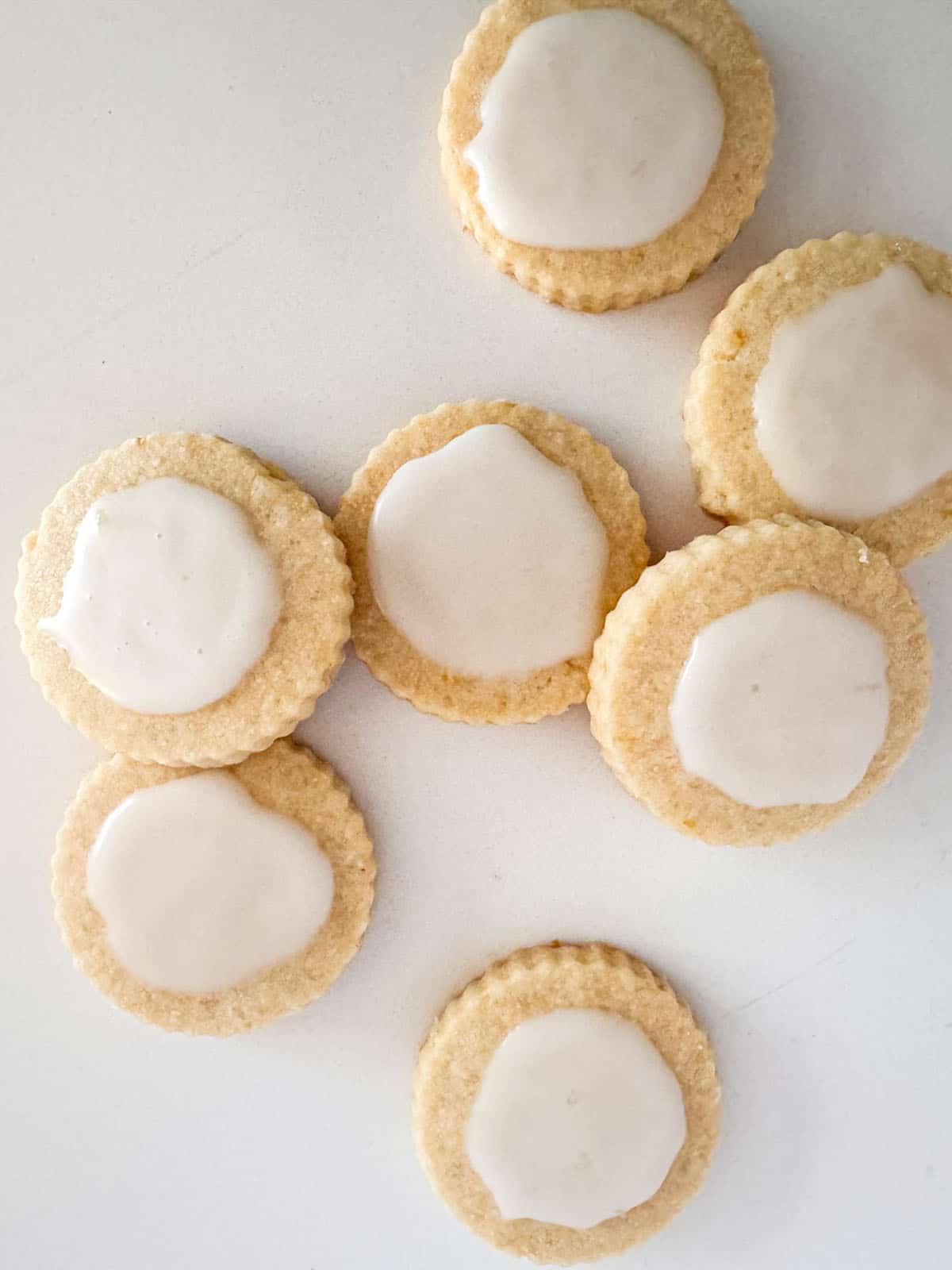
These bright lemon shortbread cookies are crisp, tender, and full of a buttery, citrus flavor. They're a melt-in-your-mouth must have for holidays, gifting, or easy entertaining.
From Rhonda's Table
Shortbread is one of my all-time favorite cookies - which is good because we made thousands of them at the catering company! Classic shortbread cookies are made with just a few basic ingredients (flour, sugar and butter), they store beautifully, and are a great gift for teachers and coworkers.
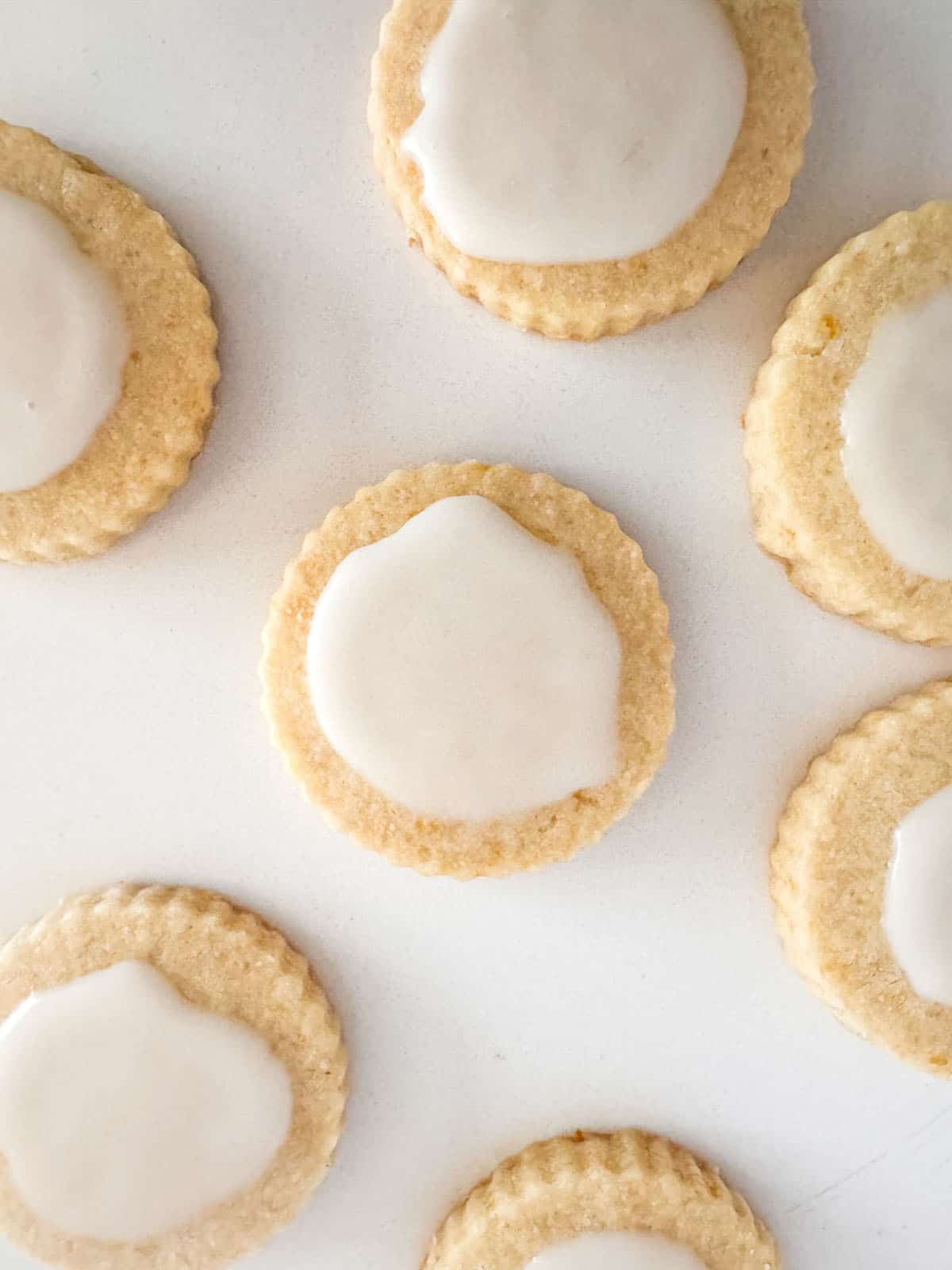
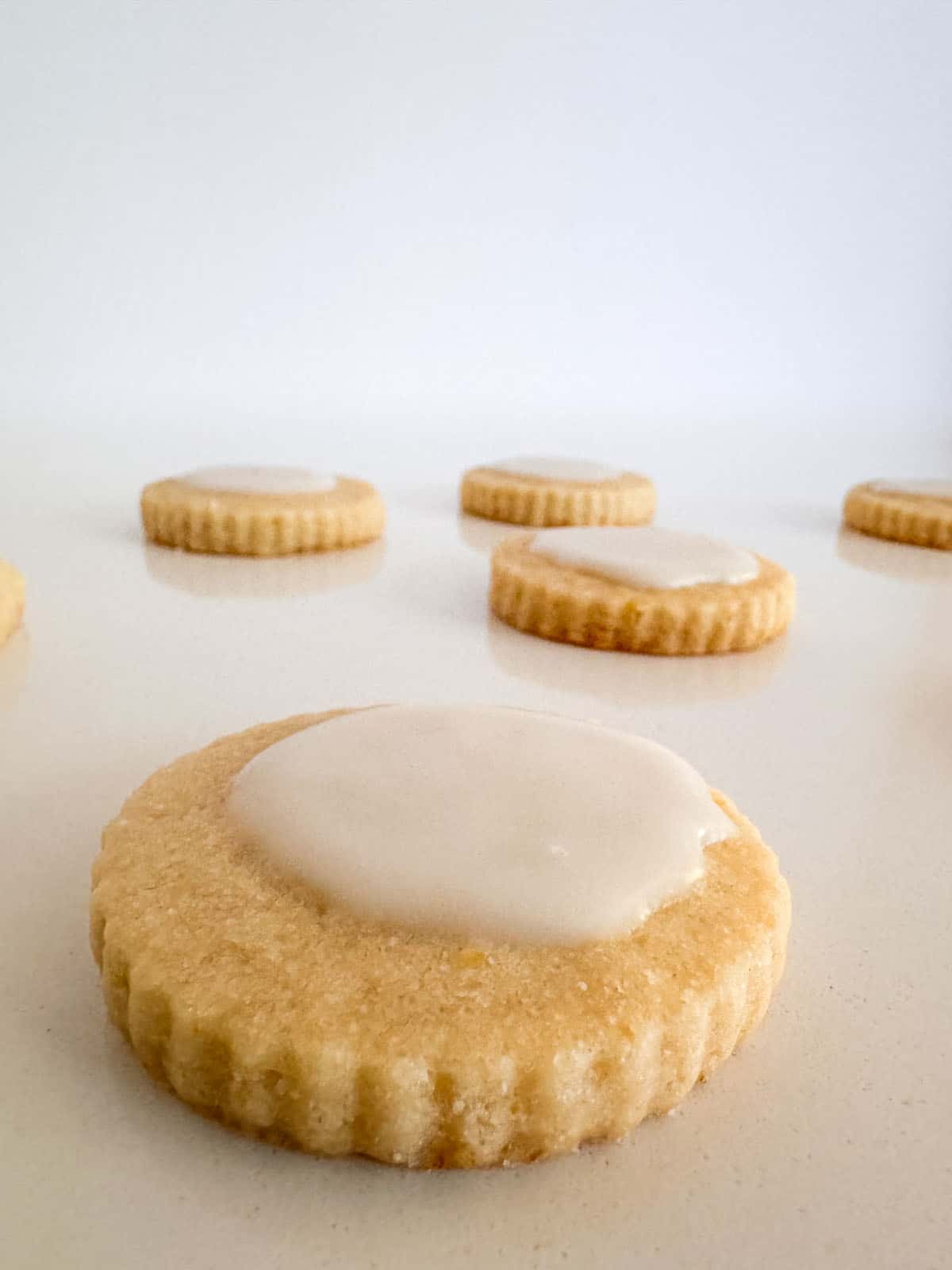
In this easy lemon shortbread cookie recipe we give the classic cookie a lift with the addition of fresh lemon in the dough plus a lemon glaze. It's perfect for the holiday cookie exchange, afternoon tea, or just enjoying with family and friends.
Jump to:
- Let's Talk Butter!
- Ingredients
- How To Make Lemon Shortbread Cookies
- Make Lemon Icing for Shortbread Cookies
- Is it Icing, Frosting, or Glaze?
- Pro Tips for Successful Shortbread Cookies
- Equipment
- Make Ahead, Storing, and Freezing Lemon Shortbread Cookies
- Some FAQ's
- Some Other Sweet Bites
- 📖 Recipe
- 💬 Comments & Reviews
Let's Talk Butter!
For tender, crisp shortbread with a delicate, crumbly texture, use a butter with a high butterfat content. Higher butterfat means less water to evaporate during baking. In the U.S. butter must contain at least 80% butterfat, but premium butters range from 82% to 85% and produce noticeably richer, more tender cookies.
European butters and European-style labeled butters are excellent choices due to their higher butterfat content. Danish Creamery (85%) creates especially velvety shortbread, while butters in the 82% to 84% range (Amish Log, Kerrygold, Plugra, Land O'Lakes European style, Challenge European style, and Cabot) provide a deliciously rich texture. American-style butters like Tillamook (81%) and Land O'Lakes (80%) still work well, but the difference is noticeable when you splurge on a higher-fat butter.
No matter which brand you choose, use real butter. Avoid butter substitutes, light butter, and margarine.
For these photos we used a lower butterfat, American-style,Tillamook butter (81%).
It's easily available in most grocery stores and can often be found on sale!
Pro-tip for baking shortbread with 84% butter
If using a very high-butterfat butter (84% - 85%), keep a close eye on the oven temperature and dough handling. With so little water to bind things together, the dough will be more fragile and melt faster at room temperature. Always chill your shortbread dough at least 30 minutes in the fridge, or 15 minutes in the freezer, immediately before placing in a hot oven. This helps lock in the shape and prevent the cookie from spreading on the sheet pan.
Ingredients
See the recipe card below for a full list of ingredients and quantities.
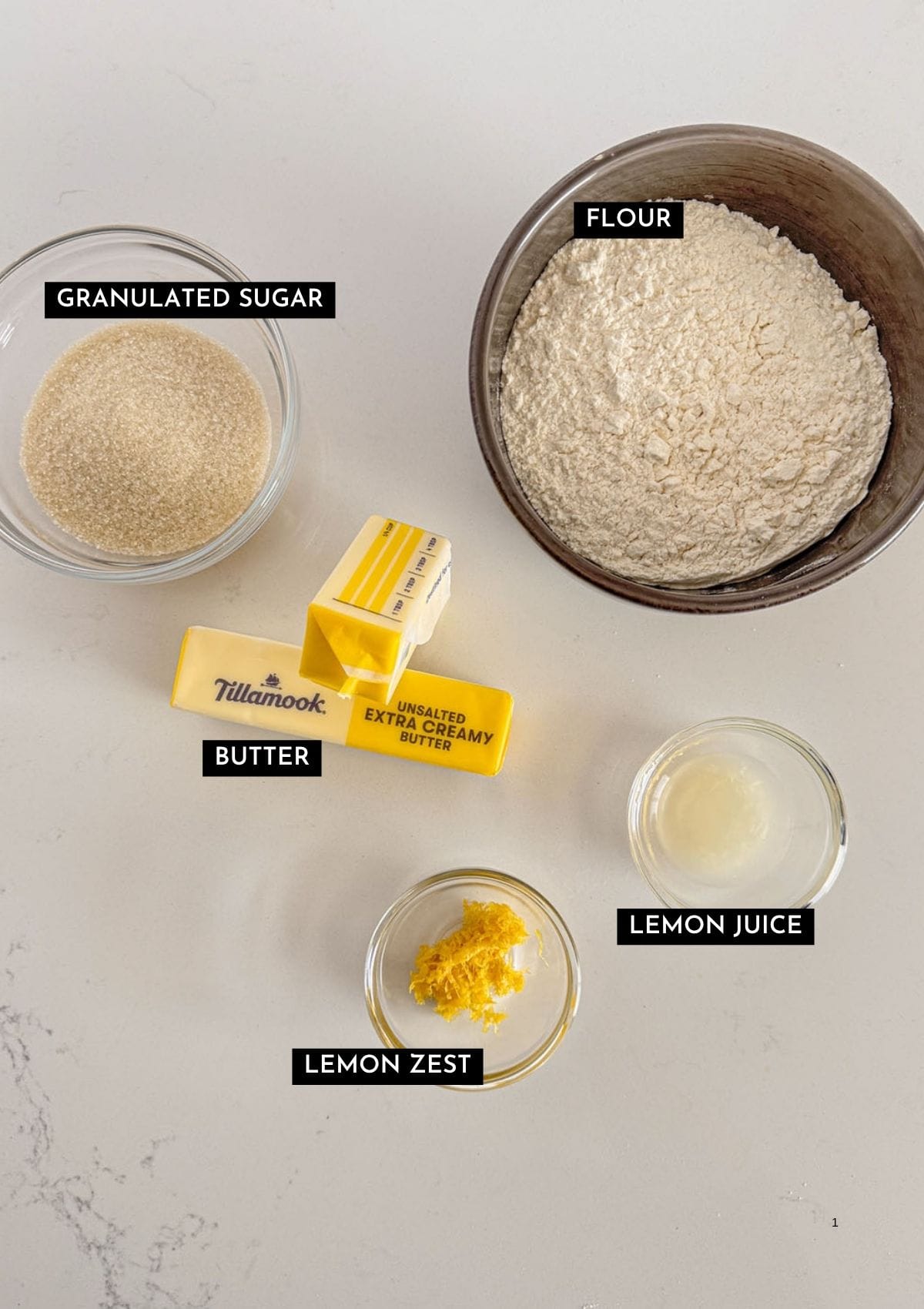
With so few ingredients in a shortbread cookie, we want to make sure we use the best ingredients possible.
- Butter. The higher fat content butter used, the more velvety and delicious your lemon shortbread cookies will be.
- Lemons. Use fresh lemon zest and fresh squeezed lemon juice for the best results.
- Flour. Use a good quality all-purpose flour like King Arthur or Bob's Red Mill. There is a definite difference in the shortbread cookies if using a lower quality flour.
Higher quality flours have stricter controls on milling standards with fewer additives. This means the flour will have a higher, more consistent protein content. The better flour will help control cookie spread, provide a rich chewy center, and more consistent liquid absorption - meaning more consistent results.
How To Make Lemon Shortbread Cookies
See the recipe card below for the complete instructions.
Make the Shortbread Dough
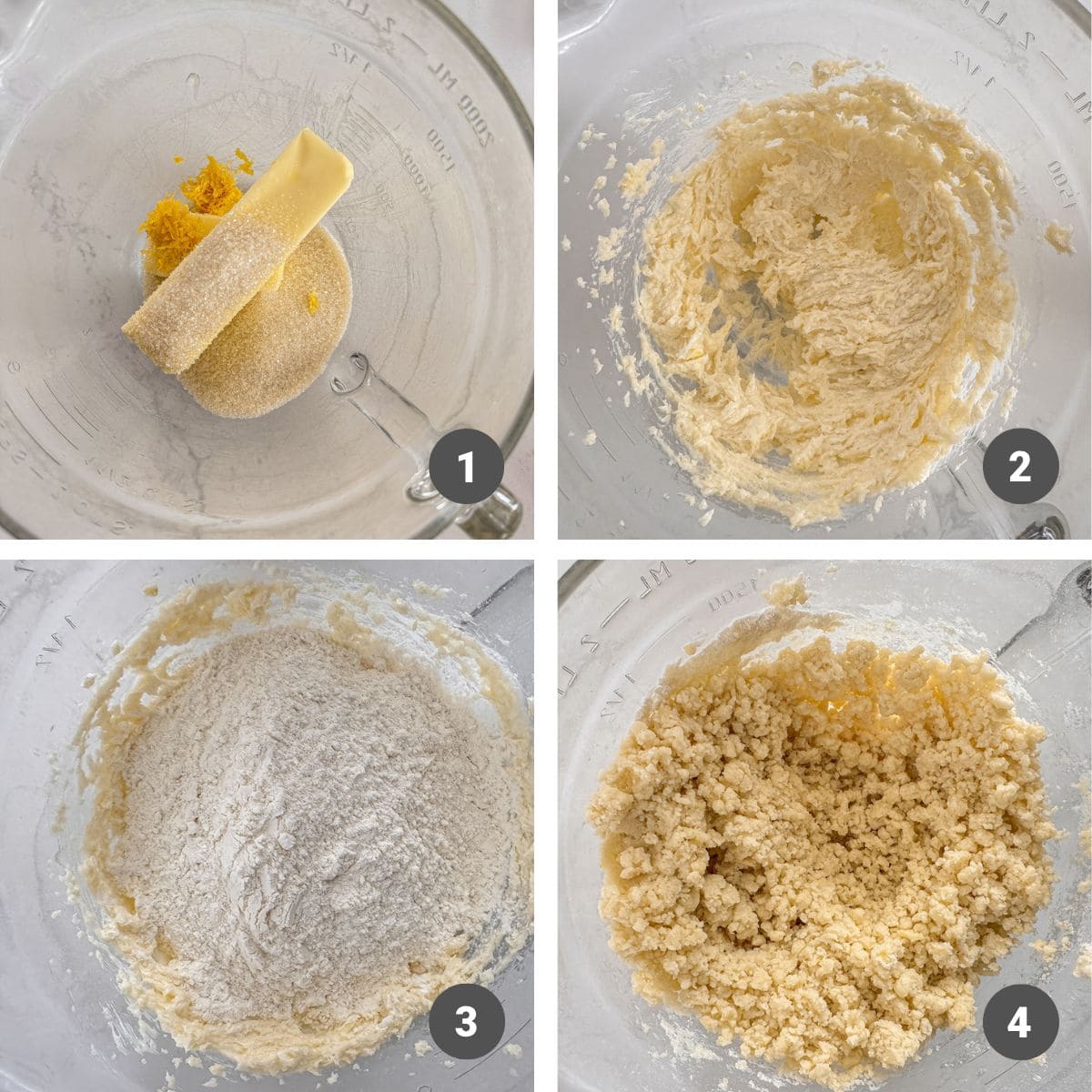
In a large mixing bowl, cream room temperature butter, sugar, and zest together until completely combined. We recommend a hand mixer for this step to ensure the butter and sugar are completely blended, but it can be done by hand with a little work. Be careful not to continue mixing after butter and sugar are combined, this can lead to cookies spreading when baking.
Add lemon juice and give a quick mix to combine. Then add flour and mix (using a hand mixer or by hand) until there is no dry flour left.
The dough might be a little crumbly, that's okay. It'll hold together when pressed and rolled.
Refrigerate the Dough Before Cutting
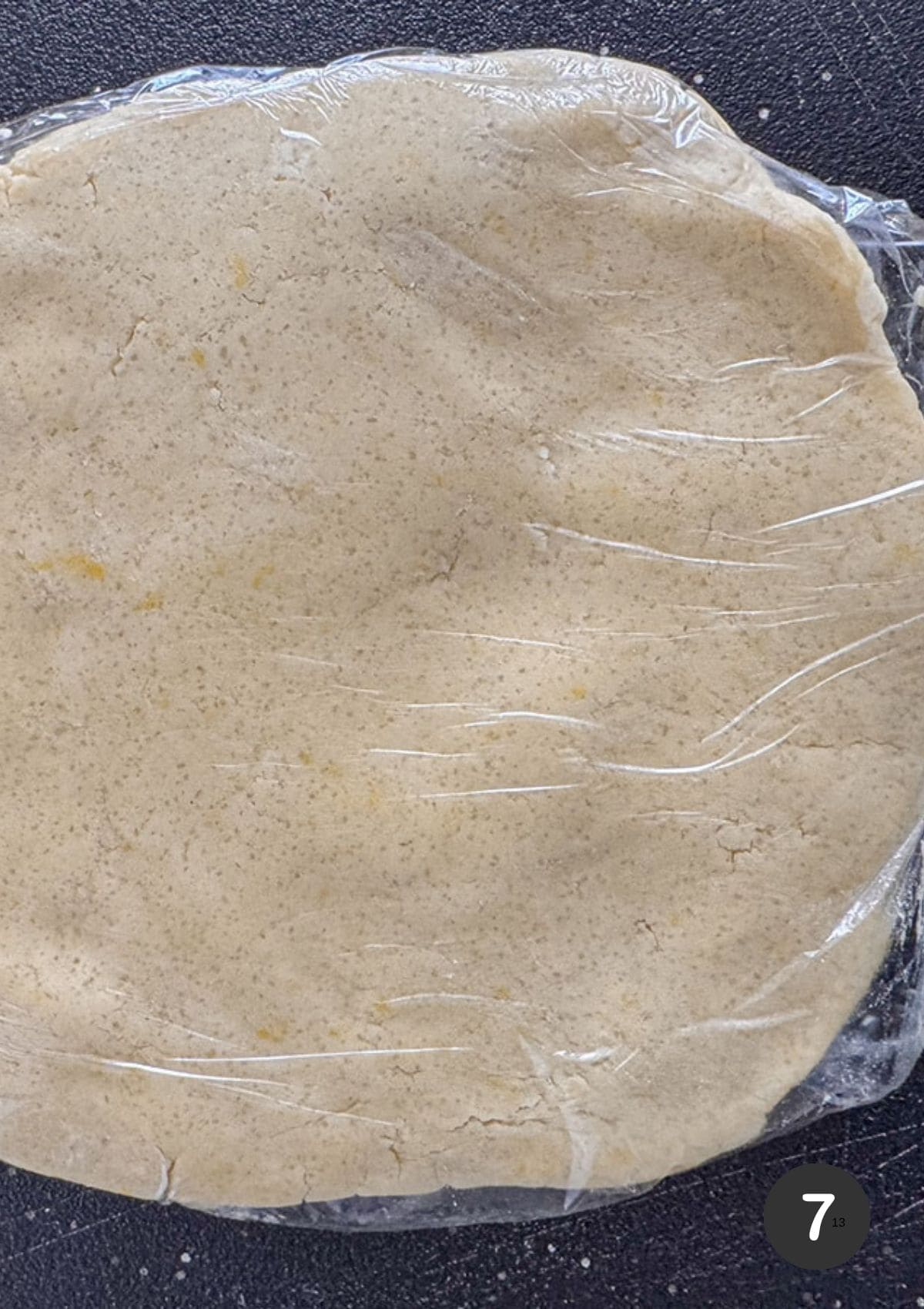
Scrape the dough onto a lightly floured cutting board and press together until it holds in a ball. Roll the dough into a disc that is ¼ - ⅜ inch thick. Wrap the dough tight and place in the refrigerator for an hour.
You can refrigerate the dough for up to 5 days before baking. If refrigerating longer than an hour, remove the dough from the fridge 10-15 minutes before cutting, this allows it to soften slightly without melting. You want to keep the dough cold, but you also want to be able to work with it when re-rolling and cutting.
A lot of recipes call for refrigerating the dough in a ball, but we find it easier to roll the dough while it is still a little soft, then refrigerating. You don't want the butter to be so soft it melts, but you do want to be able to work with the dough.
Cut Shortbread Cookies
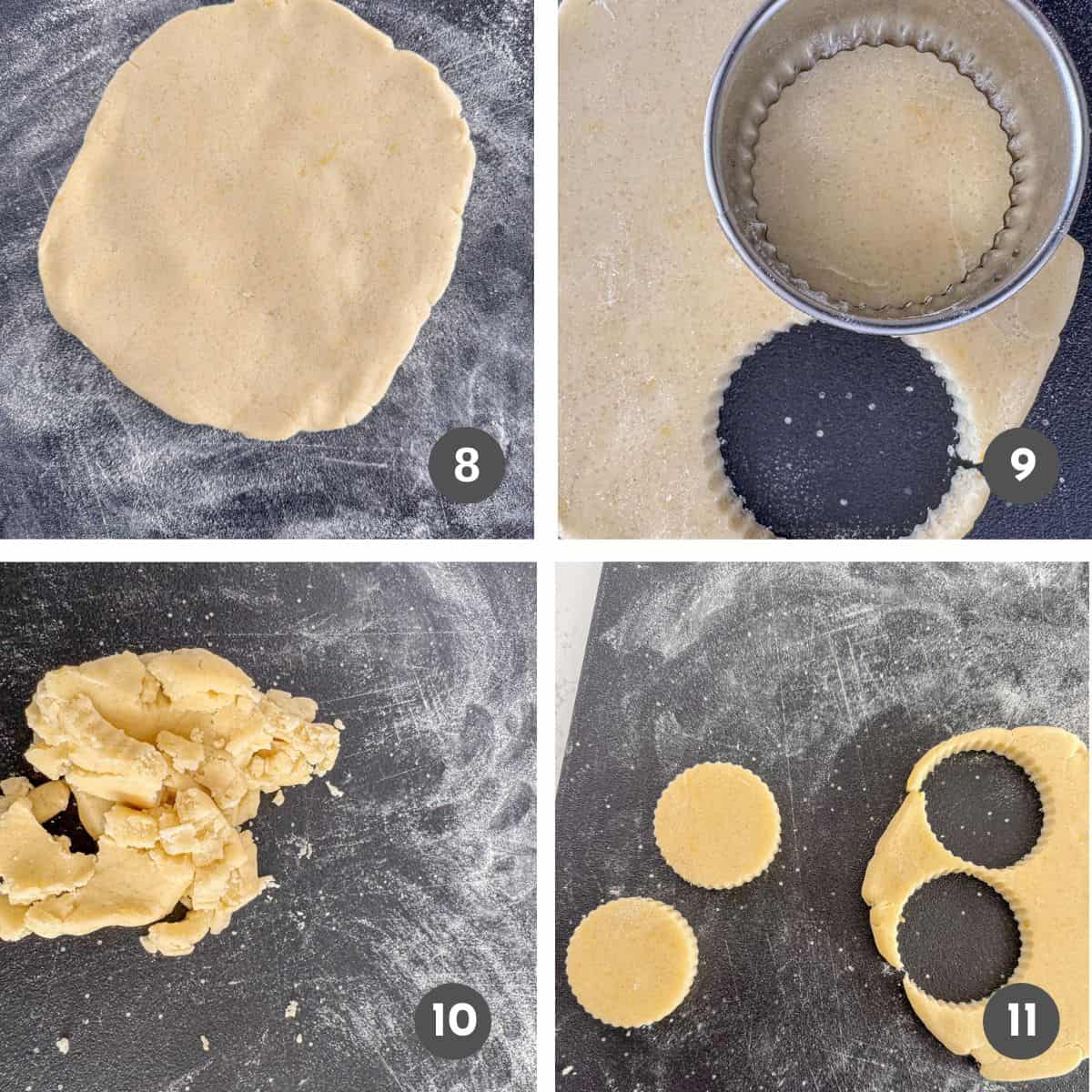
Unwrap the refrigerated dough and place on a lightly floured cutting board - the dough should be ¼ -⅜" thick. Use a cookie cutter to cut the cookies and place on a baking sheet lined with parchment paper or a silpat. We used a 2" round cookie cutter in these photos. Press all of the scraps together, roll out, and continue cutting cookies.
Work quickly to keep the butter cold. Once all of the cookies are cut, lightly cover and place in the fridge for at least 30 minutes before baking. This firms up butter and helps prevent the dough from spreading while baking.
Bake
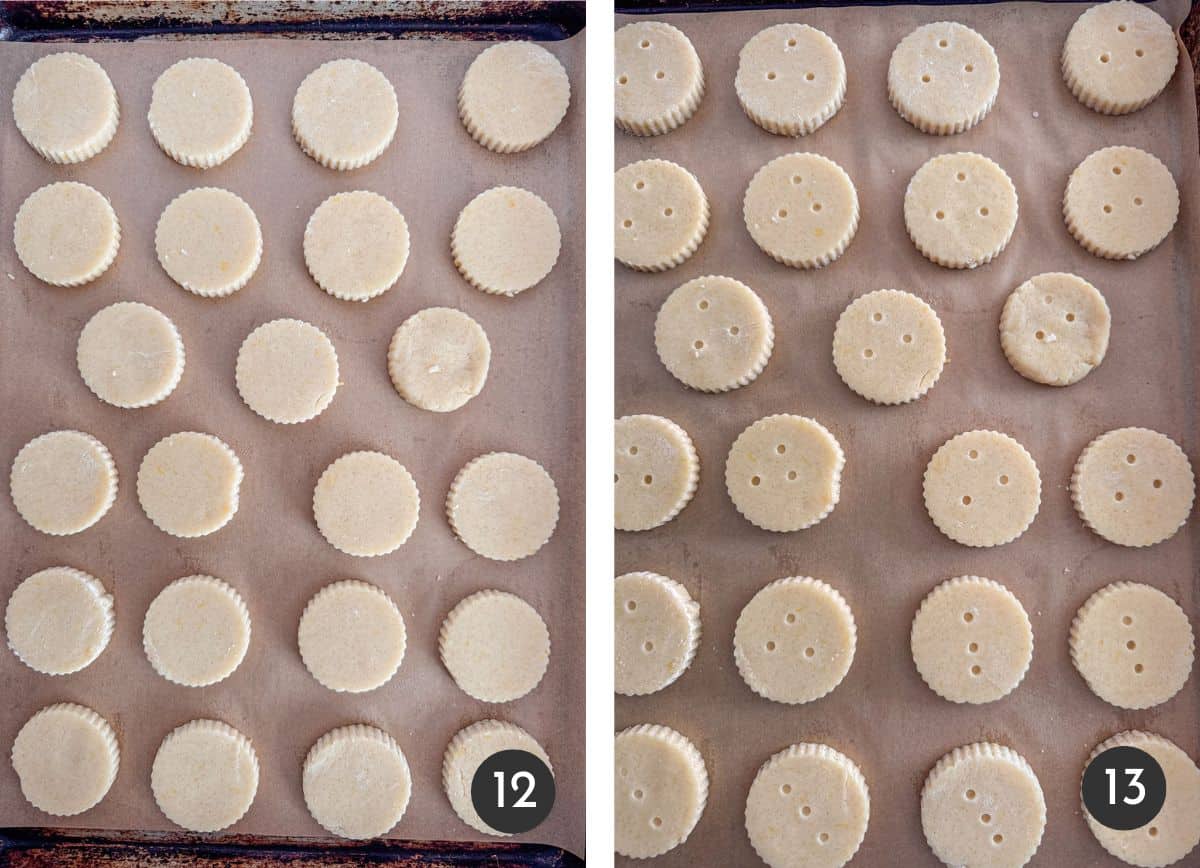
Remove the cookie sheet from the fridge. For the traditional marks on a shortbread cookie, take the round end of a chopstick (or a fork) and gently press into the top of the dough to form ‘dots’ ⅓ to ½ of the way through the dough - not all the way to the bottom. You can do this in lines on the cookies like a domino or randomly. This helps prevent bubbling of the dough and helps the shortbread hold its shape.
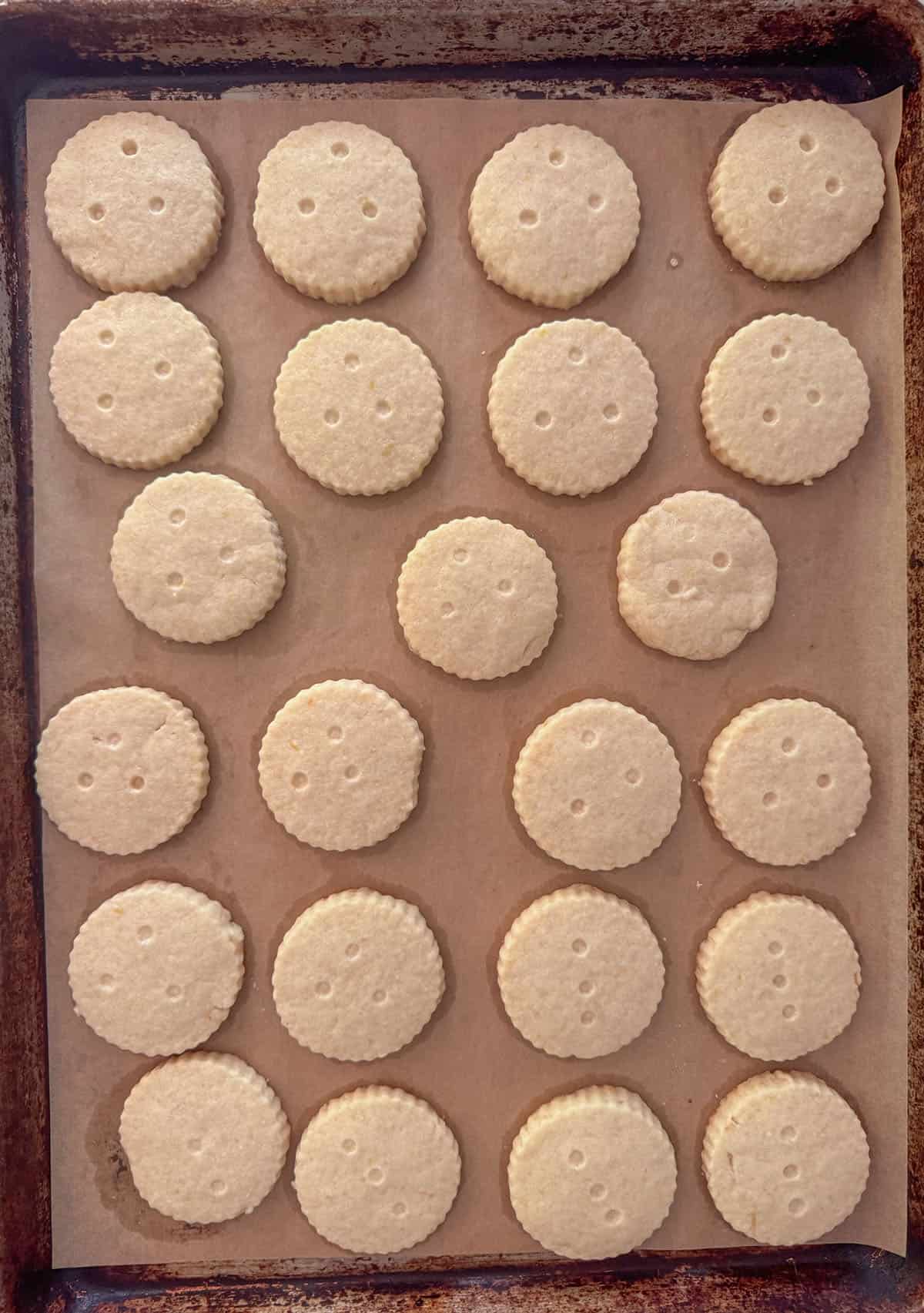
Bake the cookies until they are firm in the middle and just starting to turn a light, golden brown on the edges. Remove from the oven and let cool on the sheet pan for 2-3 minutes before removing the cookies to a cooling rack to finish cooling.
Make Lemon Icing for Shortbread Cookies
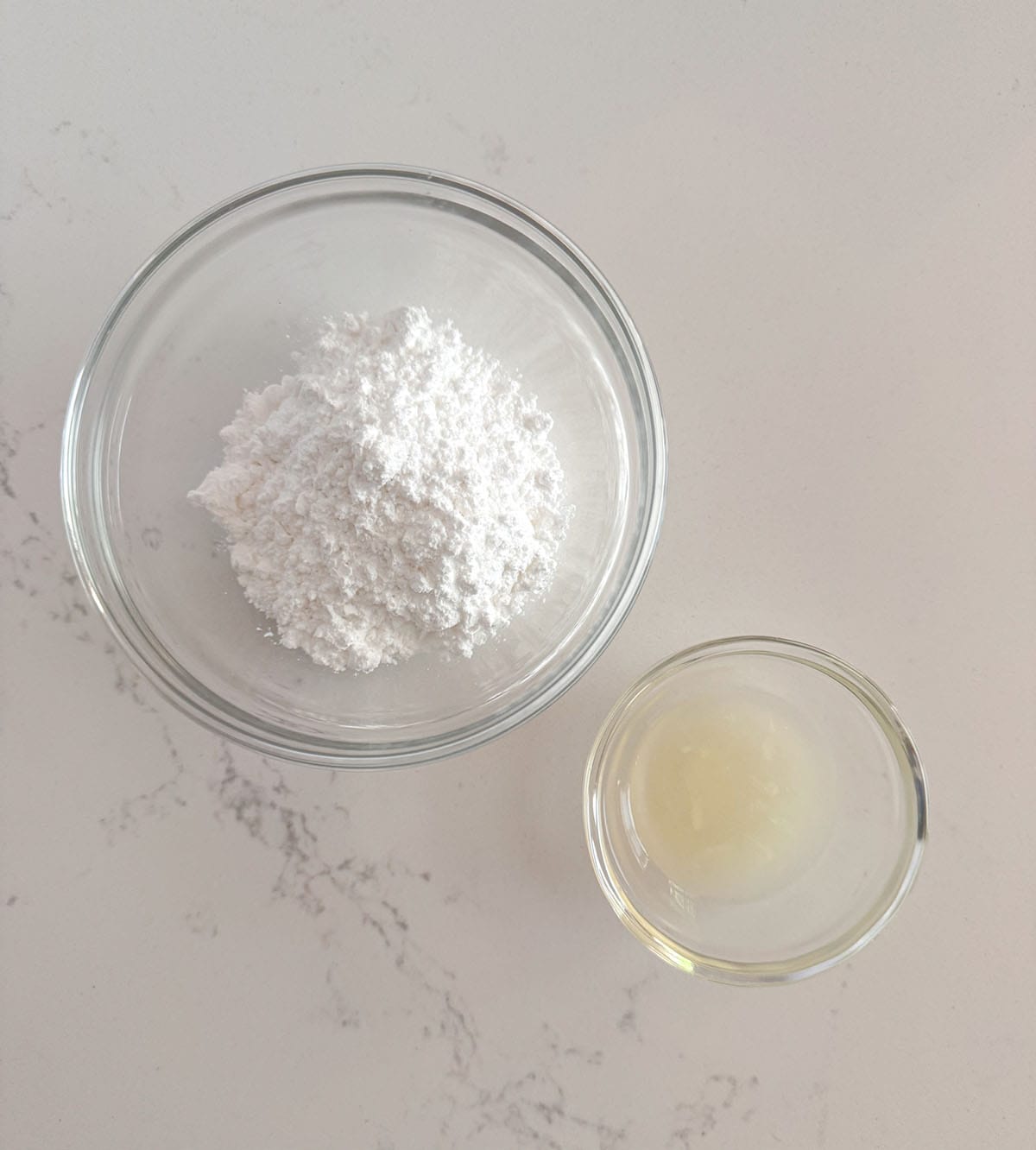
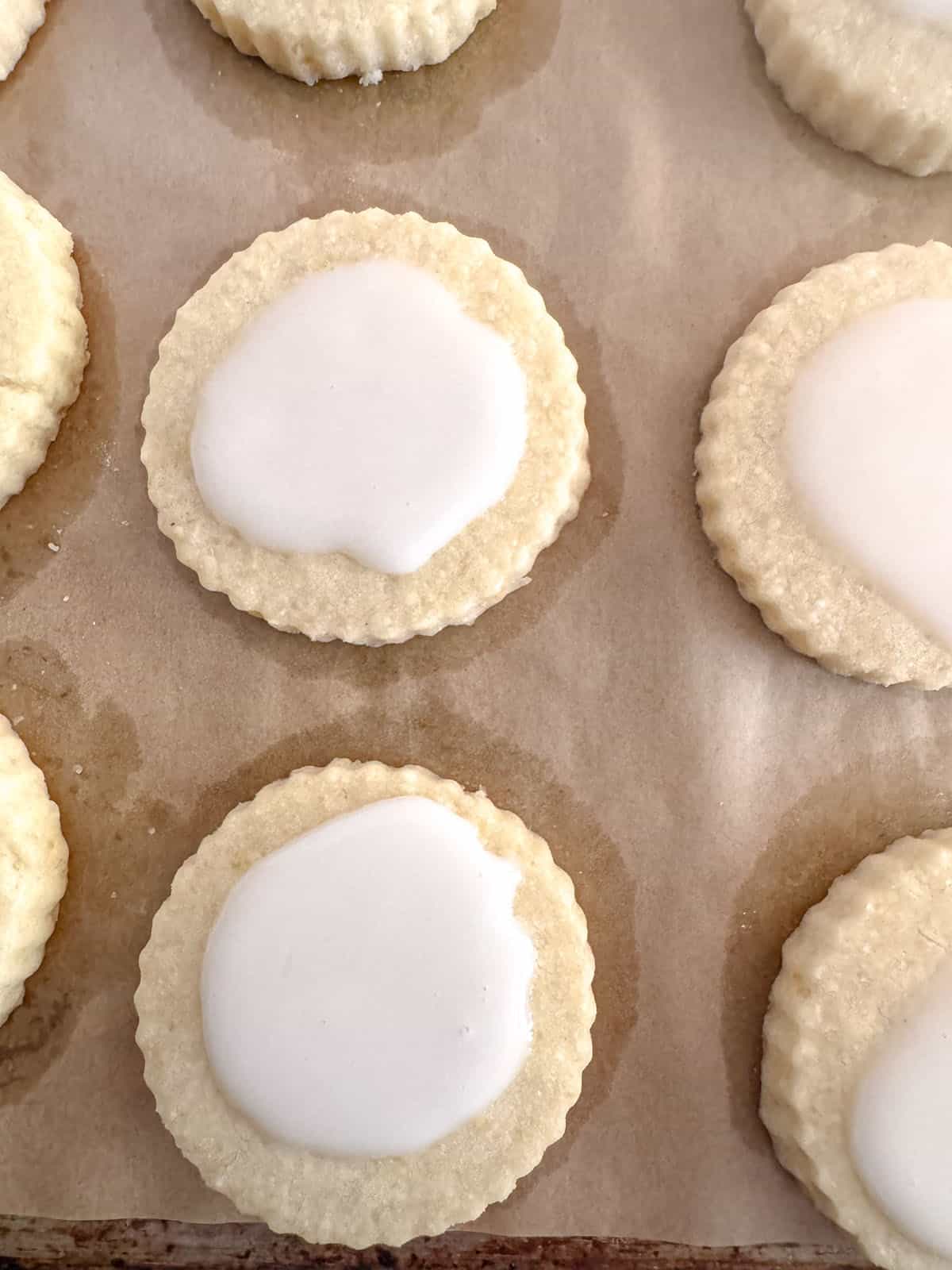
Once the cookies are cool, make the lemon icing (or glaze) by mixing powdered sugar with fresh squeezed lemon juice (½ teaspoon at a time) until you have the desired consistency. We recommend a little thicker icing (less lemon juice) if spreading and a little thinner glaze (more lemon juice) if drizzling. If you get it too thin, add a little powdered sugar - a teaspoon at a time - stir and repeat if necessary until it is the desired thickness.
For best results, make this icing right before using, it comes together in just minutes and will firm up when it sits.
Is it Icing, Frosting, or Glaze?
Icing, frosting, and glaze are all sweet toppings for baked goods, and while we often use the terms interchangeable, there are a few differences.
- Glaze is the thinnest option, usually made by stirring powdered sugar and a liquid (like juice, water, or milk) together and drizzling it over baked goods. It sets as it dries but stays relatively soft.
- Icing is a bit thicker than a glaze, typically made with powdered sugar and a liquid such as milk, cream, juice, egg whites, or purées. It can be spread or poured over baked goods and sets more firmly than a glaze.
- Frosting is the thickest of the three, made with ingredients like butter, cream cheese, shortening, or eggs combined with powdered sugar and flavorings (fruit, chocolate, extracts). Frosting is usually whipped with a mixer and can be spread or piped onto cakes, cupcakes, and cookies.
For this recipe we're simply mixing powdered sugar and lemon juice, so depending on how thick you make it, it's technically either an icing or a glaze. Now you can see why the terms are often used interchangeably!
Pro Tips for Successful Shortbread Cookies
- Use good quality ingredients. Good butter, flour, and fresh lemons will make ALL. THE. DIFFERENCE.
- Use a kitchen scale if you have one! Measuring by weight is MUCH more accurate than measuring by volume (with cups) and will give you a more consistent baked good. There are many inexpensive kitchen scales available. We like the Escali scale.
- Cream the butter and sugar. This ensures evenly blended butter-sugar throughout the dough, helps the sugar dissolve more easily, and incorporates more air into the dough for a lighter baked good.
- Use room temperature butter. Butter that is too hard or soft doesn't cream with the sugar correctly.
- Chill the dough after mixing, before cutting, and again before baking!
For more detailed pro tips visit our other shortbread cookie posts:
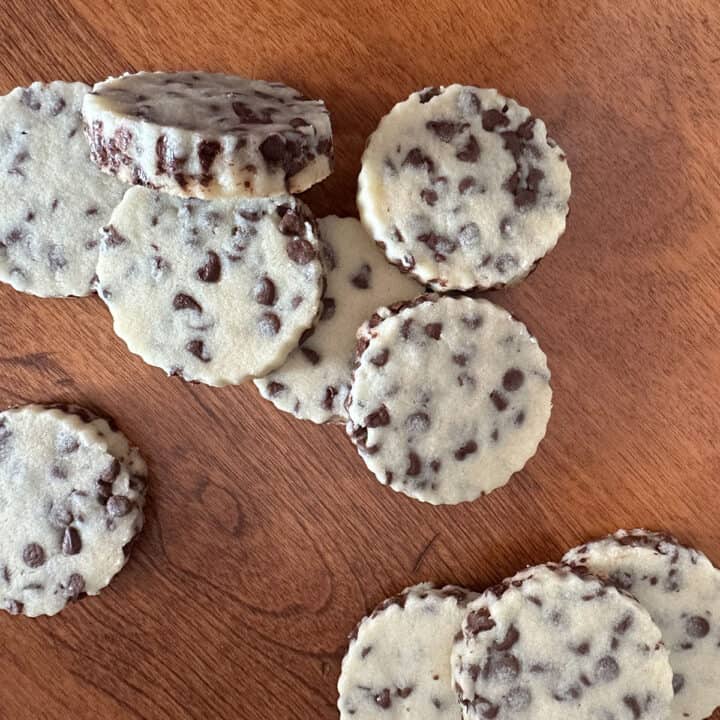
Easy Chocolate Chip Shortbread Cookies
Pecan Shortbread Cookies
Equipment
We lined our sheet pans with parchment paper for these cookies but also love reusable nonstick silicone baking mats.
Please use a kitchen scale when measuring flour! Measuring flour with cups is notoriously unreliable. A kitchen scale is much more accurate than measuring by volume. If you don't have a scale measure your flour with the scoop and level method for best results!
A hand mixer makes creaming the butter and sugar much easier.
No cookie cutter? No problem, here are a few other options for forming these cookies.
- Roll the dough into a log (we use parchment paper to help roll), wrap tight, and refrigerate for 30 minutes. Remove, unwrap, and slice into discs ¼ - ½ inch thick, poke the traditional holes (½ to ¾ of the way through), and bake as directed.
- Press the dough into a baking pan. 8 x 8 inch, 6 x 6 inch, 8 inch round, or 6 inch round pans will all work. Keep an eye on the bake times; the larger the pan means the cookie is thinner so less bake time, while a smaller pan means a thicker cookie that might need extra time. While in the pan, cut the dough ¾ of the way through into rectangles, squares, or triangles. Refrigerate, poke your holes all the way through this dough (this helps steam escape in the pan as they bake), and bake as directed.
Make Ahead, Storing, and Freezing Lemon Shortbread Cookies
Shortbread cookies are great made ahead of time and store beautifully. For best results, always store cookies in an airtight container.
Unbaked cookies
- Refrigerate cut, unbaked cookies for up to 5 days before baking. Place in preheated oven when ready to bake. If cookies are uncut, remove the dough 10-15 minutes before cutting, making the dough easier to work with but still keeping it cold. Make sure to then re-refrigerate for at least 30 minutes after cutting and before baking.
- Cut and freeze unbaked cookies for up to 3 months. Pull out the number you want to bake and let them thaw on a cookie sheet while you pre-heat your oven. Bake as directed. You may need to bake a little longer if the cookies are not completely thawed before putting in the oven.
Baked cookies
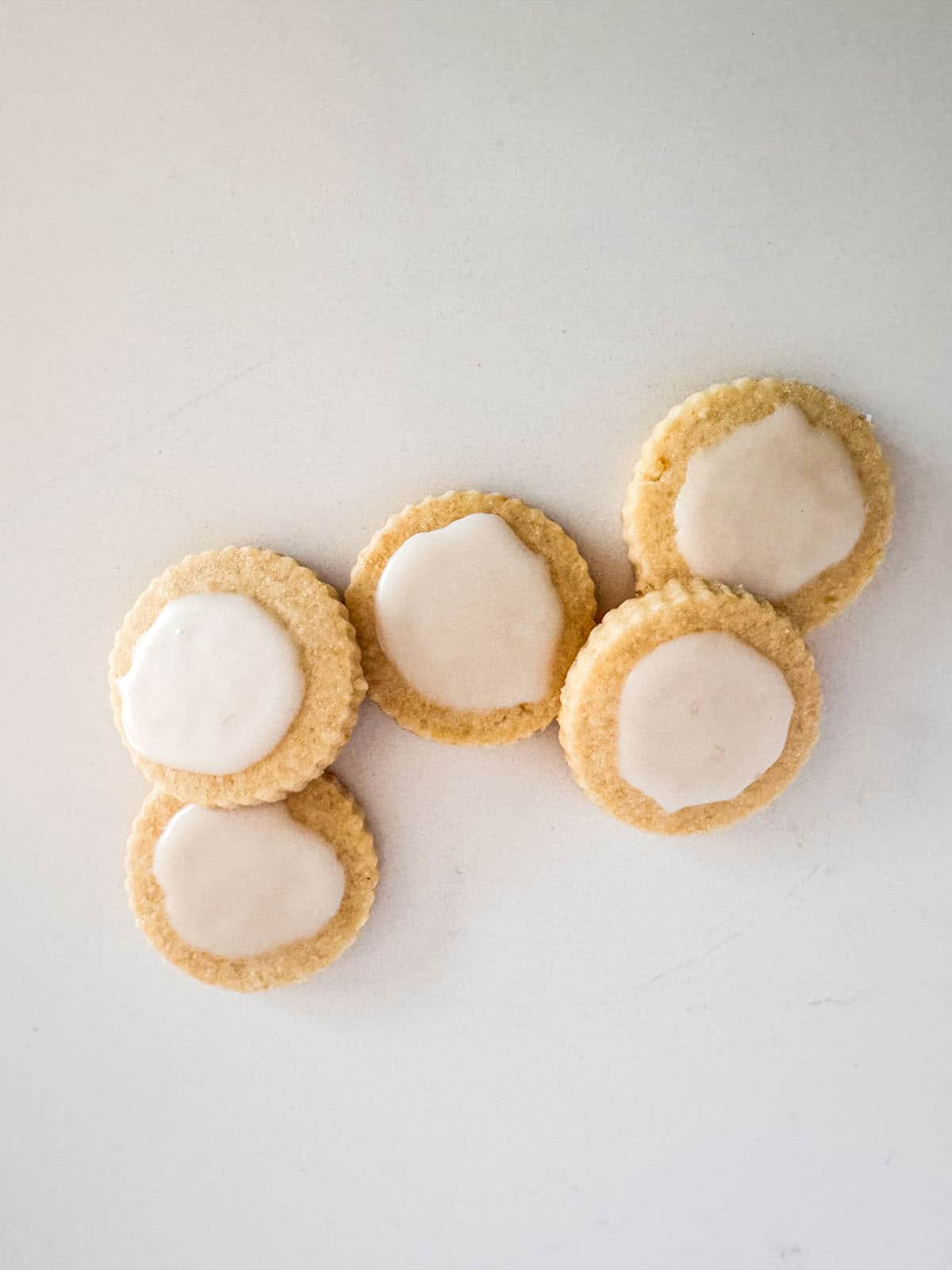
- Store baked cookies on the counter for up to 5 days. The lemon frosting will make the cookies softer the longer they sit on the counter.
- Freeze baked cookies for up to 3 months. Thaw before serving.
We recommend freezing these shortbread cookies without the icing - add the lemon icing once thawed.
NOTE: When freezing shortbread cookies,
we prefer freezing them unbaked and baking them as needed.
Some FAQ's
1. Over creaming the butter and sugar. This introduces too much air into the dough.
When baked, that air escapes, causing the cookies to puff up and then flatten out.
2. Warm dough. If the butter in the dough softens too much before hitting the heat, it will melt instantly and cause the cookies to puddle. Always chill your dough completely before baking.
3. Inaccurate flour measurements. A dough with too little flour lacks the structure needed to stand tall. To prevent a wet dough that spreads, we highly recommend weighing your flour rather than using measuring cups.
1) Too much flour. Measuring flour with cups is notoriously unreliable, so please use a kitchen scale if you have one!
2) The ingredients aren't mixed well enough. The sugar and butter need to be completely mixed and then the flour fully incorporated. Using a stand or hand mixer will help with this.
This usually means the cookies were either baked too long or had too much flour. Unlike traditional cookies, we don't want shortbread to get completely brown. They are done just as they begin to brown on the bottom. If they weren't over baked, there may have been too much flour added to the dough - please use a kitchen scale!
No. Shortbread is a tender, crisp cookie with a delicate, crumbly texture. This texture is from the butterfat in butter. Using a substitute won't have the same results. We recommend using the highest butterfat butter you have, or can purchase, for the best shortbread cookie.
No, they are all different and it comes down to the ratio of flour to butter plus any additional ingredients added to the cookies.
• Shortbread cookies have a high butter to flour ratio, 3 main basic ingredients (flour, butter, sugar), are not very sweet, and are soft and crumbly with a crisp exterior.
• Butter cookies have a bit higher flour to butter ratio but usually also have eggs, salt, and vanilla, are a bit sweeter, bake at a higher temperature, and can hold their shapes better.
• Sugar cookies have the highest flour to butter ratio, contain a leavening agent (baking soda or baking powder), salt, eggs, and vanilla, are sweeter, and bake at a higher temperature.
Some Other Sweet Bites


📖 Recipe

Lemon Shortbread Cookies
- Total Time: 2 hour 20 minutes
- Yield: 20-24 2-inch cookies 1x
- Diet: Vegetarian
Description
These bright lemon shortbread cookies are crisp, tender, and full of a buttery, citrus flavor. They're a melt-in-your-mouth must have for holidays, gifting, or easy entertaining.
Ingredients
COOKIE DOUGH
- 100 grams (½ cup) sugar
- 170 grams (12 Tablespoons) butter
- 4-5 grams (3 teaspoons) lemon zest (zest from 1 lemon)
- 8 grams (1 ½ teaspoons) lemon juice
- 280 grams (2 ⅓ cups) flour
ICING
- 53 grams (½ cup) powdered sugar
- 1-2 teaspoons lemon juice (may not need it all)
Instructions
- Cream room temperature butter, sugar, and lemon zest together using a hand mixer (a stand mixer or by hand also works) until completely mixed. Add lemon juice and mix until combined.
- Add flour to butter mixture and mix until no dry bits remain. NOTE: this is easier to do with an electric mixer but can be done by hand.
- Place dough on a lightly floured cutting board and press dough together into a tight ball. Using a rolling pin, roll the dough out until ¼ to ⅜ inches thick. You may need to lightly flour the rolling pin or dough to keep it from sticking. Work quickly so the butter doesn't melt!
- Wrap dough tight and refrigerate for an hour.
- Remove the dough, unwrap, and place on a lightly floured cutting board. Use a cookie (or biscuit) cutter to cut the cookies. Place on a lined baking sheet.
- Gather scraps, re-roll, and cut cookies. Repeat until all dough is cut.
- Lightly cover the cut dough and refrigerate the entire sheet pan for at least 30 minutes.Preheat the oven to 300°F while dough is chilling.
- Remove the baking tray from the refrigerator. Pierce the tops of the cookies ½ to ⅓ of the way through the dough (not all the way through) using a fork or the round end of a chopstick.
- Bake in a 300°F oven for 28-35 minutes. The cookie should be firm in the middle and a light, golden brown on the edges.
Notes
Please use a kitchen scale when measuring flour! Measuring flour with cups is notoriously unreliable. A kitchen scale is much more accurate than measuring by volume. Too much flour can result in dry, crumbly, hard, or crunchy cookies.
For more lemon flavor add another 1-3 teaspoons zest to the cookie dough.
Ingredients. For best results use a good butter with a high butterfat content, good flour (King Arthur or Bob's Red Mill), and fresh lemon zest and juice. Never use a butter substitute.
Why do I need the dots? This helps prevent bubbling of the dough and helps it hold its shape. For the traditional marks on a shortbread cookie, take the round end of a chopstick and gently press ½ to ⅔ of the way into the top of the dough to form ‘dots’.
- Prep Time: 25 minutes
- Inactive Time: 1 hour 30 minutes
- Cook Time: 25 minutes
- Category: Dessert
- Method: Baking
- Cuisine: American
Nutrition
- Serving Size: 1 cookie
- Calories: 129
- Sugar: 7 g
- Sodium: 1.2 mg
- Fat: 6.4 g
- Carbohydrates: 16.7 g
- Protein: 1.4 g
- Cholesterol: 16.6 mg




Comments
No Comments